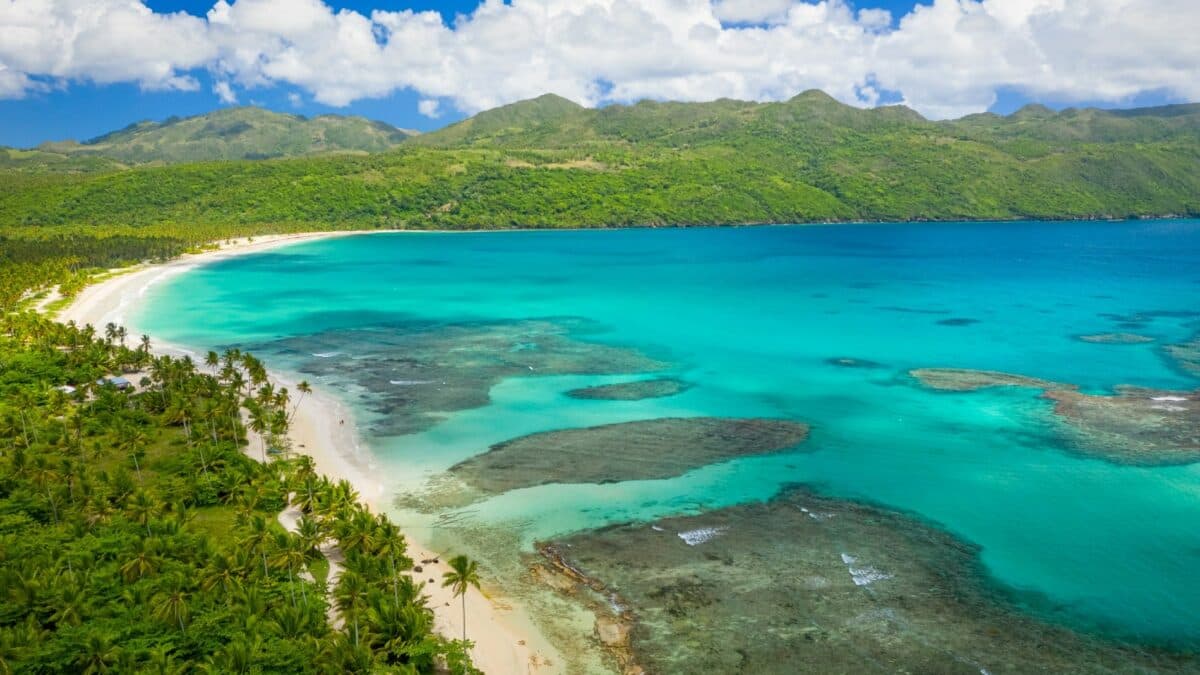
Playa Diamante, Cabrera: The Calm Natural-Pool Beach Guide 2026
Photo by Asael Peña on Unsplash
Playa Diamante in Cabrera is a shallow, reef-sheltered natural pool on the Dominican north coast. Here's how to get there, what it costs, and when to go in 2026.
Key Takeaways
Key Takeaways
- Playa Diamante is a small cove just east of Cabrera where a rocky reef holds back the Atlantic, leaving a shallow, calm natural pool.
- Entry is free. Expect to pay for parking (around RD$100), drinks and fried-fish lunches from the shacks along the sand.
- It suits families, nervous swimmers and anyone who wants to float rather than fight waves. Go on a weekday morning for clear water and space.
- Pair it with Laguna Dudú, Playa Grande or Cabo Francés Viejo for a full north-coast day.
Playa Diamante in Cabrera is a small, reef-protected cove on the Dominican Republic's north coast. The water is shallow, warm and almost still, like a natural swimming pool. It sits about 3 km east of Cabrera town off the coastal road to Nagua. Entry is free, and simple food shacks serve fried fish and cold drinks.
The first time I pulled off the highway toward the beach, I didn't believe the locals who promised me "agua de piscina", pool water. This stretch of coast is known for big Atlantic swell, cliffs and rip currents. Then I walked out of the almond trees and saw it: a pale green-turquoise bowl, knee-deep for what felt like forever. A row of dark rocks took the hits from the ocean. Kids were floating on old inner tubes and a grandmother sat in the water in a plastic chair.
I've been back many times since, at every hour and in every season. This guide covers what I've learned about Playa Diamante Cabrera: getting there, when to go, what you'll pay, and how to fit it into a wider trip along the coast. If you're spending a few days nearby, you'll also want my guide to Laguna Dudú in Cabrera, which is only a few minutes' drive west.
What Makes Playa Diamante Cabrera So Different?
Playa Diamante Cabrera is different because its water stays calm when the rest of the north coast is rough. A natural barrier of rock and coral sits close to shore and breaks the Atlantic waves. Behind it is a shallow lagoon, mostly waist-deep or less. That makes it one of the safest swimming spots between Río San Juan and Nagua.
Most of the coastline of Cabrera, in María Trinidad Sánchez province, is wild. You get sea cliffs, blowholes and beaches where the red flag flies more often than not. Playa Diamante feels like the coast decided to take the afternoon off.
The natural pool, explained
The cove is small, around 150–200 meters of sand curving around the lagoon. At low tide, the reef shows above the surface and the pool goes glassy. At high tide, or when a northern swell comes in, some white water spills over the rocks. Even then, the area near the sand stays gentle.
The bottom is a mix of sand and patches of seagrass and rock. The water is a milky turquoise rather than crystal-clear, because fine sand gets stirred up easily. On calm mornings after a few dry days, though, you can see small fish around your ankles.
Who it's perfect for (and who might be disappointed)
Playa Diamante is a great fit for:
- Families with small children: the shallows go out a long way and there's no shore break
- Non-swimmers and nervous swimmers who want to sit in the sea without worrying
- Older travelers who want an easy walk in and out of the water
- Anyone recovering from a long drive who just wants to float with a cold Presidente
It's not the place for surfing, serious snorkeling or long beach walks. The cove is compact, and the reef-edge water beyond the rocks is open Atlantic. Please don't climb out onto it. For waves, head west to Playa Grande (more on that below).
Where Is Playa Diamante and How Do You Get There?
Playa Diamante is about 3 km east of central Cabrera, just off Carretera 5, the coastal highway toward Nagua. By car or motoconcho (motorbike taxi) it takes about 5–10 minutes from town. A short dirt lane leads from the highway down to a parking area behind the beach.
The turnoff is easy to miss. In my experience the hand-painted sign is sometimes there and sometimes not. Drive east out of Cabrera, slow down once you've passed the edge of town, and look for parked motos and a small cluster of stalls near the road. If you're unsure, ask at any colmado (corner shop): "¿Playa Diamante?" will get you a pointed finger and directions.
Getting there from nearby towns and airports
| Starting point | Distance | Approx. drive time | Best option | Rough cost |
|---|---|---|---|---|
| Cabrera town | ~3 km | 5–10 min | Motoconcho or car | RD$100–150 (~$2–3) by moto |
| Laguna Dudú | ~12 km | 15–20 min | Car or taxi | RD$800–1,200 (~$13–20) taxi |
| Río San Juan | ~25 km | 30 min | Car, taxi or guagua | RD$100–150 by guagua |
| Nagua | ~30 km | 35 min | Car or guagua | RD$100–150 by guagua |
| Samaná El Catey Airport (AZS) | ~70 km | 1 hr 10 min | Private transfer | US$70–100 |
| Puerto Plata Airport (POP) | ~110 km | 2 hrs | Private transfer or rental | US$100–140 |
| Las Terrenas | ~95 km | 1 hr 45 min | Private driver or rental | US$90–130 one way |
Prices are 2026 estimates and vary with season and how well you negotiate.
By guagua (shared minibus)
The guaguas running between Río San Juan and Nagua pass right by the turnoff. Tell the driver "me deja en Playa Diamante" and he'll drop you at the lane. Fares are cheap, usually RD$100–150 (~$2). Flag one down on the highway to get back. They run often in daylight but thin out after about 6 pm.
Coming from the Samaná Peninsula
Plenty of travelers based in Las Terrenas make Cabrera a day trip, heading out through Nagua. If you don't want to drive yourself, you can arrange a private transfer or rental car from Las Terrenas and plan stops at Playa Diamante and Laguna Dudú. Leave early. The drive back after dark on the Nagua stretch isn't much fun.
When Is the Best Time to Visit Playa Diamante?
The best time to visit Playa Diamante is on a weekday morning, ideally from December to April when the weather is drier. Get there between 8 and 11 am for the calmest, clearest water and the fewest people. Sundays and public holidays bring big local crowds and loud music.
That said, the lagoon is swimmable all year. The reef does its job even in the rainier months. What changes is visibility and atmosphere.
| Period | Weather | Crowds | What to expect |
|---|---|---|---|
| Dec–Apr | Drier, 26–29°C, breezy | Moderate; busy on weekends | Clearest water; northern swells can push spray over the reef |
| Semana Santa (Easter week) | Hot, sunny | Very crowded | Party atmosphere, music, families camping all day. Skip it if you want quiet |
| May–Aug | Hot, humid, short showers | Busy in July–Aug school holidays | Warm, flat water; great for kids |
| Sep–Nov | Wettest; hurricane season peaks | Quiet | After heavy rain, runoff can cloud the lagoon. Check forecasts |
Insider tip: watch the tide as well as the weather. On a falling tide in the morning, the reef stands highest and the lagoon is like bathwater. I check a free tide app the night before. Low tide around 9–10 am is my perfect Playa Diamante morning.
Food, Facilities and What It Costs at Playa Diamante
Visiting Playa Diamante costs nothing to enter. A full day with lunch and drinks usually comes to RD$1,000–1,800 (~$17–30) per person. You'll pay small amounts for parking, chair rental and food from the family-run shacks behind the sand. Bring cash in pesos. Cards are rarely accepted.
What you'll find on the beach
Facilities are basic and very Dominican, which is part of the charm:
- Food shacks cooking fried fish, tostones (twice-fried green plantain) and rice on wood or gas fires
- Plastic tables and chairs under almond trees and palm-thatched shelters
- Coolers of cold drinks: Presidente beer, soft drinks, bottled water
- Coconut vendors who will hack one open with a machete
- Informal parking attendants who keep an eye on your car
Don't expect lifeguards, proper changing rooms or showers. Sometimes a stall will let you use a basic toilet if you're eating there. A small tip is appreciated.
Typical prices in 2026
| Item | Typical price (RD$) | Approx. USD |
|---|---|---|
| Parking | RD$100–200 | $2–3 |
| Chair or table rental | RD$100–300 | $2–5 |
| Fried fish plate with tostones and salad | RD$600–1,000 | $10–17 |
| Lobster or shrimp plate (when available) | RD$1,200–1,800 | $20–30 |
| Large Presidente beer | RD$200–275 | $3.50–4.50 |
| Fresh coconut | RD$80–150 | $1.50–2.50 |
| Bottled water | RD$50–75 | $1 |
Fish is sold by weight and priced by the pound. Pick yours from the cooler, agree on a price before it hits the oil, and ask how long it'll take. On busy Sundays I've waited over an hour, so order early, then swim.
Insider tip: ask for your fish "frito con ajo", fried and finished with garlic sauce, and order a side of arepita de yuca (cassava fritter) if anyone's making them. They're not always on offer, but when they are, they're the best thing on the beach.
Quick Tips
Quick Tips
- Bring cash in small notes. RD$100 and RD$200 bills make paying the parking attendant and coconut seller much easier.
- Pack water shoes. Most of the bottom is sand, but there are rocky and grassy patches, and the occasional sea urchin near the reef.
- Stay inside the reef. The water beyond the rocks is open Atlantic, with strong currents and surge.
- Shade goes early. On weekends the shelters fill by 11 am. Bring a beach umbrella or arrive early.
- Take your trash with you. Bins are scarce, and the cove's beauty depends on visitors carrying things out.
- Lock valuables in the trunk before you arrive, not in the parking lot where people can see you.
How Does Playa Diamante Compare With Other Beaches Near Cabrera?
Playa Diamante is the calmest beach around Cabrera, but not the most dramatic. If you want waves and a long stretch of sand, Playa Grande in Río San Juan is better. For empty, rugged scenery, head for the coves around Cabo Francés Viejo. Playa Diamante wins on safety and ease.
Here's how I'd fit it into a day or two on this part of the coast:
- Laguna Dudú (12 km west): a deep, freshwater cenote-style lagoon with a zip line that drops you into the water. Pair it with Playa Diamante for a perfect "fresh water morning, salt water afternoon" combination. My Laguna Dudú guide has entry fees and directions.
- Cabo Francés Viejo National Park (just north of town): a protected headland with cliffs, coastal forest and wild, swim-at-your-own-risk beaches. Come here for the views. Don't swim.
- Playa Grande, Río San Juan (~25 km west): a long golden beach with real surf and a lively shack scene. See my Playa Grande beach and surf guide before you go.
- Laguna Gri-Gri (~25 km west): a mangrove boat trip out of Río San Juan to caves and small coves. The Laguna Gri-Gri boat trip guide covers prices and timing.
- Playa El Bretón (west of Cabrera): a small cove beneath cliffs, quieter and rougher than Diamante, and lovely for a sunset drink.
A route that works well for me: Laguna Dudú at opening time, Playa Diamante for a long swim and fried-fish lunch, then the Cabo Francés Viejo viewpoints in the late afternoon light. Everything is within about 15 km.
For wider context on the north coast, the official Go Dominican Republic tourism site has background on the Atlantic-side provinces and seasonal events.
Is Playa Diamante Safe for Kids and Non-Swimmers?
Yes. Inside the reef, Playa Diamante is one of the safest places on the north coast for kids and weak swimmers. The water is shallow, warm and mostly flat, with no shore break. The main risks are the rocky reef edge and the lack of lifeguards, so adults still need to keep watch.
I've seen toddlers splashing at the waterline and teenagers paddling around on inflatables while the waves crash harmlessly on the rocks behind them. A few practical things for families:
- Set a boundary. Tell kids the reef rocks are off-limits. They're sharp, slippery, and the surge on the far side can knock adults over.
- Watch after rain. Murky water means you can't see the bottom, so take more care with little ones.
- Bring your own floats. Inflatables are rarely for rent, though some vendors sell cheap ones.
- Protect from the sun. The shallow water reflects light and there's little natural shade on the sand itself. Rash vests and reef-safe sunscreen are a good idea.
On busy Sundays, the bigger safety issue is the crowd. You get packed shallows, plenty of rum, and people driving in and out of the narrow lane. On weekdays the beach is relaxed and you may share it with a handful of local families.
Final Thoughts: Why Playa Diamante Deserves a Stop
Some beaches make you gasp. Playa Diamante makes you exhale. It's the place I take friends after a long drive along the north coast. We sit in warm, knee-deep water with a cold drink while the Atlantic thunders on the rocks a few meters away and the smell of fish frying with garlic drifts down from the shacks.
It isn't polished, and it's better for it. Come on a weekday morning, bring cash and water shoes, stay inside the reef, and order your fish before you swim. Exploras doesn't list operators in Cabrera yet, so arrange things locally: hire a motoconcho from Cabrera's central park, jump on a guagua on the highway, or ask your guesthouse host to call a taxi they trust.
Then spend an afternoon at Playa Diamante Cabrera and see why locals call it la piscina.
Sources
Samaná Travel Specialist | 7 years booking experiences across the Peninsula
Sofia has personally tested and vetted over 80 tours, excursions, and services across Samaná — from whale watching season prep to El Limón waterfall treks and Los Haitises kayak routes. She focuses on matching traveler types to the right experience: families, couples, adventure seekers, digital nomads.

Plan your Samaná adventure
Explore the top tours and experiences near this guide, arranged with the operator in the Exploras chat.
Browse all experiences