Laguna Dudú, Cabrera: Entry Fee, Zip Line & How to Get There (2026).
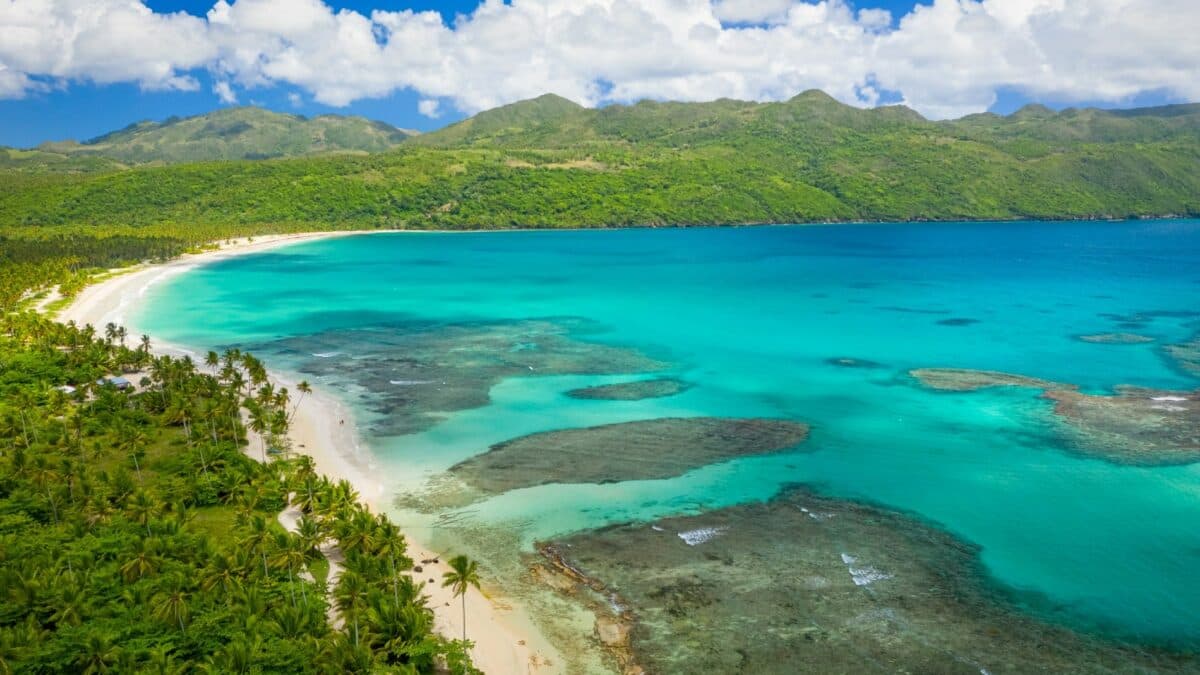
A practical guide to Laguna Dudú, the deep blue sinkhole lagoon near Cabrera: 2026 prices, hours, zip line, diving rules, safety and how to fit it into a Samaná–north coast drive.
Key Takeaways
Key Takeaways
- Laguna Dudú is a park of deep freshwater sinkhole lagoons near La Entrada, Cabrera, on the coast road between Nagua and Río San Juan.
- Guides from 2025 and 2026 list adult entry at RD$350–400 (about US$6–7). Children 3–11 pay RD$200. Cash is safest.
- It is open every day, roughly 9:00 a.m. to 5:00 p.m. Weekdays and early mornings are quieter than weekends.
- The 10 m zip line drops you into water more than 25 m deep. It is for over-13s only, after you sign a consent form.
- Cave diving is for certified divers only. Recent guides list a US$20 permit.
The coast road from Samaná to the north coast is mostly palm trees, small towns and glimpses of the Atlantic. Then, a few kilometres before Cabrera, a sign points to a hole in the forest filled with bright blue water. Laguna Dudú is one of the most popular stops on this road for Dominican families, and it's an easy break on the drive to Río San Juan, Cabarete or Puerto Plata.
What is Laguna Dudú? It is a privately run eco-park built around freshwater lagoons that formed in collapsed limestone sinkholes, which makes them similar to the cenotes of Mexico. The main lagoon is more than 25 m deep, and underwater tunnels connect it to other entrances. You come to swim, jump in from the zip line and look around the caves, and certified divers come to explore the flooded tunnels underneath.
What is inside the Laguna Dudú park?
The park has two main bodies of water. The deep lagoon is the one in all the photos. Its water is a vivid blue, it sits below forested cliffs, and the zip line runs above it. Cement steps lead down to the water's edge. A second, calmer lagoon is meant for bathing. Part of it is fenced off to protect the fish and turtles that live there and to keep swimmers in a safe area.
A Taíno cave at the top of the site has stalactites, stalagmites and a small, cold pool inside, and you reach it by rocky steps. There is a rustic restaurant overlooking the cave and the forest. A bar sells snacks beside the bathing lagoon. In the garden you'll find hammocks, gazebos, swings and a volleyball court. A separate children's area has small pools, slides, changing rooms and toilets. You can also rent a kayak.
Laguna Azul is not part of the park, although people often confuse the two. It is a separate, privately owned lagoon a few minutes away on the Cabrera–Nagua road, about 40 ft (around 12 m) deep, with its own small entry fee (RD$100 when Diario Libre covered it in 2020).
How much does Laguna Dudú cost in 2026?
Prices change often, and older blogs still quote RD$150–250. These are the most recent figures we could find:
- Adults (12 and over): RD$400. One June 2026 guide gives RD$350–400, or about US$6–7.
- Children 3–11: RD$200
- Under 2: free
- Zip line: RD$100 per ride, according to two guides. A third says it's included in the entry, so ask at the gate.
- Life jacket: RD$50
- Locker: RD$100
- Dive permit: US$20, for certified divers only
In 2022 the price list charged foreigners more (RD$350 against RD$250 for nationals). None of the 2025–2026 sources mentions a separate foreigner rate, but ask before you pay. You don't need to book ahead. Bring Dominican pesos in cash, because cards are not reliably accepted.
What are the opening hours, and when is it busiest?
Recent guides say the park opens every day, Monday to Sunday, from about 9:00 a.m. to 5:00 p.m. One says it closes at 5:30 p.m. Older press reports gave 8:00 a.m. to 6:00 p.m., so treat the closing time as approximate. Arrive by mid-afternoon at the latest.
On weekends the park fills up with Dominican visitors, and the atmosphere is lively. If you want calm water and no queue for the zip line, go on a weekday and arrive around opening time.
Is the zip line safe, and who can do it?
The zip line is a cable that runs over the deep lagoon. Staff tell you when to let go, and you drop about 10 m into the water. Afterwards a team helps you out of the water unless you would rather swim to the steps yourself. The national tourism site calls it a makeshift line used "at your own risk", and El Día describes it as an extreme activity. Only people over 13 may ride, and everyone signs a consent form.
A few plain safety points:
- The water is very deep. Guides give 25 m to 40 m for the main lagoon, so you can't touch the bottom anywhere near the jump.
- Wear a life jacket. One guide says they are mandatory, and they are cheap to rent. Weak swimmers and children should keep one on all day.
- Let go carefully. Diario Libre advises care on the zip line, because a bad landing from that height can hurt you.
- Watch children constantly. Use the bathing lagoon and the kids' pools for younger children.
- Wear water shoes, because the rock around the edges is uneven.
- Don't drink and jump. The rescue risk is real here. El Día reported at least five deaths at the lagoon between 2014 and 2019.
Can you dive at Laguna Dudú?
Yes, but only if you're qualified. The lagoons sit on a flooded cave system, and the Dominican Republic Speleological Society describes an entry tunnel about 100 m long. A decorated section reaches a maximum depth of around 20 m, and a halocline (a layer where fresh water meets salt water) affects visibility. The line continues for roughly 45 minutes of swimming to another entrance, Cueva de Lilly, and a second route leads to Pozo de los Caballos.
Recent guides say the park admits certified divers only, for a permit of about US$20. Divers bring their own gear or go with a local dive centre. Swimming into an overhead environment like this needs proper cavern or cave training, not just an open-water card. In February 2019 two visiting divers died inside the system, and the park closed while specialists recovered them. If you're not cave-trained, snorkel in the open lagoon and leave the tunnels alone.
How do you get to Laguna Dudú?
The park is near the village of La Entrada, on the Nagua side of Cabrera. Most guides put it about 7.5–8 km from Cabrera town. Coming from Samaná and Nagua you reach it before Cabrera, and the signposted entrance is on your left. There is parking on site.
The distances and times below are road figures to Cabrera town from Rome2rio route planning. Other guides give slower times, so allow extra time for traffic, speed bumps and stops.
| From | Road distance / drive time | Notes |
|---|---|---|
| Las Terrenas | ~84 km, about 1 h 30 min–2 h | Coast road through Nagua; you pass the lagoon before Cabrera |
| Samaná town | ~105 km, about 1 h 50 min–2 h | Same route, via Nagua |
| Nagua | ~37 km, about 35 min | Diario Libre puts the park about 25 km from Nagua |
| Río San Juan | ~22 km, about 20 min to Cabrera | Continue through Cabrera to the lagoon |
| Cabarete | ~72 km, about 1 h–1 h 30 min | Via Río San Juan |
| Sosúa | ~84 km, about 1 h 10 min+ | No direct bus |
| Puerto Plata airport (POP) | ~92 km, about 1 h 20 min–2 h | The tourism ministry gives about 2 h from Puerto Plata |
By public transport: Rome2rio lists buses about five times a day from Nagua to Cabrera (around 1 h 25 min) and from Río San Juan to Cabrera (around 55 min). Local guaguas and carros públicos also run along the coast road. From Cabrera, a taxi or motoconcho takes about 8 minutes. One 2026 guide quotes US$2–3 for a motoconcho. From Las Terrenas or Samaná you'll need to change in Nagua, which makes for a long day. Hiring a driver is usually more practical. Our Samaná taxis and transfers guide covers the options.
What else is on the same road?
Laguna Dudú is one stop in a string of good ones along the coast between Nagua and Río San Juan:
- Playa Diamante: a calm, shallow beach about 10 minutes from the lagoon. It's good for children after the deep water.
- El Saltadero: a river waterfall and pool close to the centre of Cabrera, where local teenagers jump from the rocks. Entry was free when Diario Libre visited.
- Cabo Francés Viejo: a protected cape (a national park since 1974 and a natural monument since 2009) with lighthouse ruins. The small cliff-backed bay of El Bretón lies inside it.
- Playa Grande: a wide golden beach about 2 km long between Cabrera and Río San Juan, with seafood shacks and surf. The tourism ministry warns of undertow in winter, so don't swim far out.
- Laguna Gri-Gri, Río San Juan: a mangrove lagoon and bird sanctuary. Boat trips run to the Cueva de las Golondrinas and end at Playa Caletón.
If you are heading on to the windsurf and kite beaches, see our Cabarete and Sosúa guide. If you are flying out of Puerto Plata, see things to do in Puerto Plata.
When is the best time to visit?
The lagoon is open all year, and rain is the main thing to plan around. In Cabrera's 1991–2020 climate records, November is the wettest month (about 248 mm) and March the driest (about 98 mm). El Día recommends sunny days, which show off the blue colour best and keep the rocky steps drier.
Within the week, weekday mornings are the quietest, and weekends are the busiest.
Is Laguna Dudú worth the detour?
If you're already driving between Samaná and the north coast, yes. It is right by the road, it costs a few hundred pesos, and it makes a good break in a long drive. The water colour is striking, the zip line is a real thrill, and children have a proper play area.
It is less worth a special trip if you only want a quiet swim. On a busy Sunday it is loud and crowded, and the facilities are simple rather than polished. The best plan is to combine it with the beaches on the same road. Stop at Dudú in the morning, have lunch on Playa Grande or in Cabrera, and arrive in Cabarete or Río San Juan before dark.
Starting from the peninsula? Our guides to Las Terrenas and Samaná cover what to see before you head west.
Sources
- Laguna Dudú: adrenalina y naturaleza en un solo destino — El Día (April 2026)
- Laguna Dudú — Go Dominican Republic, Ministry of Tourism (October 2026)
- Laguna Dudú: qué hacer, precios y cómo llegar — RD Party (June 2026)
- Guía completa de Laguna Dudu 2026 — LagunaDudu.com, independent guide (June 2026)
- Laguna Dudú, Cabrera — Descubriendo RD (July 2025)
- Cabrera: conoce el municipio de RD que lo tiene todo — Diario Libre (June 2020)
- Qué hacer en Cabrera, el paraíso del nordeste — Acento (May 2022)
- Laguna El Dudu — Dominican Expert (October 2026)
- El Dudu cave dive description — Dominican Republic Speleological Society (October 2026)
- Al menos cinco personas han muerto en Laguna Dudú — El Día (February 2019)
- Playa Grande — Go Dominican Republic, Ministry of Tourism (October 2026)
- Laguna Gri-Gri — Go Dominican Republic, Ministry of Tourism (October 2026)
- Las Terrenas to Cabrera routes — Rome2rio (October 2026)
- Cabrera, María Trinidad Sánchez: climate data — Wikipedia (October 2026)
Samaná Travel Specialist | 7 years booking experiences across the Peninsula
Sofia has personally tested and vetted over 80 tours, excursions, and services across Samaná — from whale watching season prep to El Limón waterfall treks and Los Haitises kayak routes. She focuses on matching traveler types to the right experience: families, couples, adventure seekers, digital nomads.
Plan your Samaná adventure
Explore the top tours and experiences near this guide — arranged directly with the operator.
Browse all experiencesRelated Articles.

Sosúa Beach Guide: Playa Sosúa, Playa Alicia & Snorkelling (2026)
A practical 2026 guide to Sosúa's beaches: Playa Sosúa's reef-sheltered bay and new beachfront, Playa Alicia, snorkelling, diving prices, getting there and the best months.

Ocean World Puerto Plata: Prices, Dolphin Swims & What to Know (2026)
Ocean World in Cofresí, Puerto Plata: every programme and its published price, what the ticket includes, age and height rules, cruise-day logistics and the captive-dolphin debate.

Cayo Arena (Paradise Island): Puerto Plata Day Trip Guide (2026)
A practical guide to Cayo Arena (Paradise Island), the sandbar off Punta Rucia: getting there from Puerto Plata, snorkelling, mangroves, published tour prices, crowds and weather.