Cayo Arena (Paradise Island): Puerto Plata Day Trip Guide (2026).

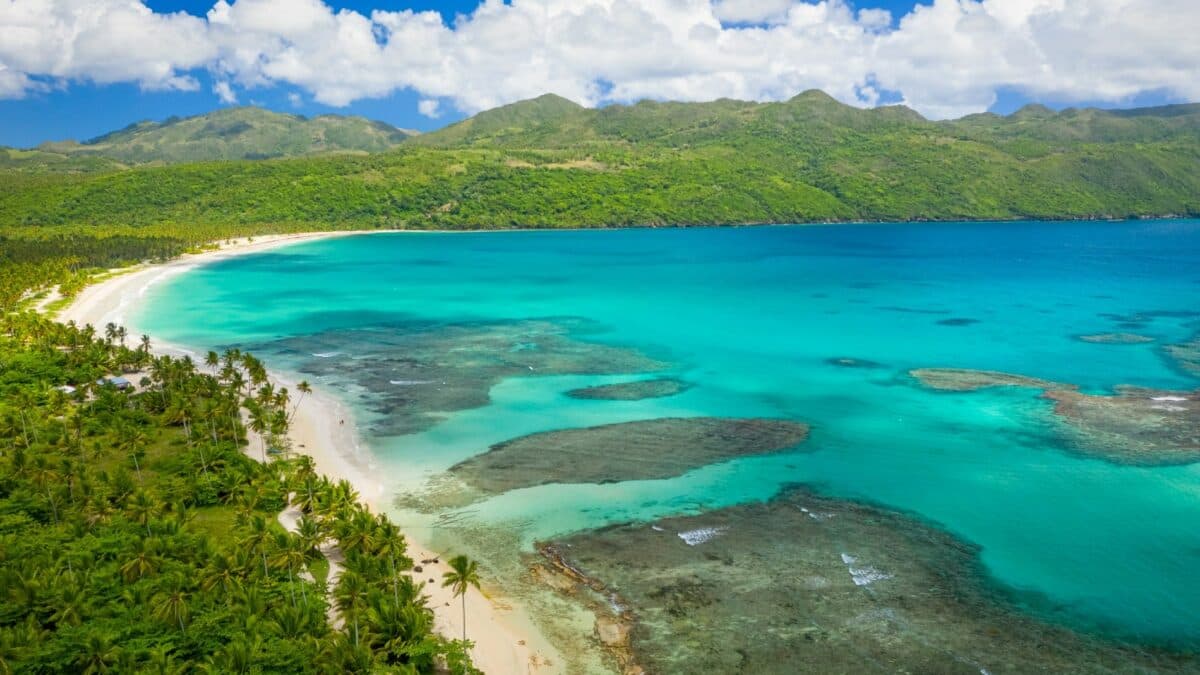
Photo by Efraín E. Marmolejos on Unsplash
A practical guide to Cayo Arena (Paradise Island), the sandbar off Punta Rucia: getting there from Puerto Plata, snorkelling, mangroves, published tour prices, crowds and weather.
Key Takeaways
Key Takeaways
- Cayo Arena, sold as Paradise Island, is a tiny sandbar ringed by coral, reached only by boat from Punta Rucia, west of Puerto Plata.
- Plan on a 7 to 10 hour day: roughly 1.5–2 hours by road, then 20–45 minutes by boat each way.
- Published group tours start around US$80–100 per person; cruise-line versions from Amber Cove list US$139.99 per adult.
- Its reef is listed in the plan of the Montecristi Underwater National Park: no anchoring on reefs, no touching or taking marine life.
- It gets busy: El Día reports an estimated 500–1,000 visitors a day, so leave early and keep expectations realistic.
Picture a strip of white sand in the open Atlantic, ringed by water so clear you can see the bottom from the boat. That is the promise of Cayo Arena, one of the best-known day trips on the Dominican Republic's north coast. The reality is just as pretty, but it comes with a long road, a boat ride and plenty of company.
What is Cayo Arena? Cayo Arena (also called Cayo Paraíso or Paradise Island) is a small sandy islet surrounded by coral reef, out at sea off the fishing village of Punta Rucia. It has no hotels or shops; you visit on a day trip to swim, snorkel and sit in the sun for an hour or two. In 2023 it was placed 27th on Banana Boat's list of the world's 50 best beaches, which described it as more sandbank than beach.
Where is Cayo Arena?
The cay sits in the Atlantic, west of Puerto Plata city and east of Montecristi. Acento, a Dominican news site, notes a quirk: geographically it belongs to the Montecristi coast, but administratively it falls under Estero Hondo, a municipal district of Villa Isabela in Puerto Plata province. Punta Rucia, the village where almost every boat leaves from, is also in Puerto Plata province.
Most people book it as a day trip from the resorts around Puerto Plata, Sosúa or Cabarete, and from the two cruise ports. The sandbar itself is small and changes shape with waves and currents, so photos from different years can look quite different.
How do you get to Cayo Arena?
There are two legs: a drive to Punta Rucia, then a boat. By road, you can come from Puerto Plata through Imbert and Villa Isabela, or from the Santiago side by turning off the Navarrete–Montecristi highway at Villa Elisa, according to El Día and the Ministry of Environment.
Boat times vary with the boat and route. El Día's March 2026 report on Punta Rucia gives about 20 minutes for the crossing, Acento says about 30, and some tours and the cruise-line catamaran quote about 45 minutes, usually because they cross La Isabela Bay or add the mangroves and a stop at a shallow "natural pool".
| Starting point | Typical tour pickup | Road to the boat | Boat to the cay | Whole day |
|---|---|---|---|---|
| Puerto Plata (Playa Dorada, Cofresí) | 7:30–8:10 a.m. | about 1.5–2 hours | 20–45 min | 8–10 hours |
| Sosúa | about 6:50 a.m. | longer: add the drive to Puerto Plata | 20–45 min | 8–10 hours |
| Cabarete | about 6:30 a.m. | longest of the three | 20–45 min | 8–10 hours |
| Amber Cove / Taíno Bay cruise ports | set by the ship's tour | about 1 h 45 min | about 45 min by catamaran from La Isabela | about 7 hours |
Pickup times come from one large booking site's published schedule; road times come from travel guides and vary with traffic and stops. If you are coming from the cruise piers, our guide to the Puerto Plata cruise ports explains how Amber Cove and Taíno Bay work.
What do you do on Cayo Arena?
Mostly you swim, snorkel and float. Tours hand out masks and snorkels, and the water around the sand is shallow and clear, so even nervous swimmers can watch fish near the surface. Life jackets are standard on the boats, and the Ministry of Tourism's blog notes that everyone on its visit wore one.
Time on the cay is short. Published itineraries give between one and two and a half hours, with one major booking site listing about two hours of free time. The sandbar has a few simple wooden and palm-thatch shelters for shade, but there are far more visitors than shade, so a hat and a cover-up matter more than a towel.
Many trips also stop at a "piscina natural", a shallow sandbank in the bay where people stand in clear water, before or after the cay. Lunch is usually back on the mainland, often a Dominican buffet at a beach restaurant in Punta Rucia.
How good is the snorkelling at Cayo Arena?
Good for an easy, shallow swim; not a dive-boat experience. The Ministry of Environment's management plan for the Montecristi Underwater National Park says the park holds a large share of the country's most representative coral reefs, including endangered staghorn coral. It also lists the reef edge at Cayo Arena as one of five sites where commercially important fish gather to spawn.
The same plan is frank about pressure on these reefs: overfishing, the invasive lionfish, warming seas, sediment, and damage from anchors and outboard propellers. Visibility on the day depends on wind and swell. If snorkelling is your main goal, go early, swim away from the crowd near the boats, and never stand on coral.
What about the mangroves and the manatees?
The coast between Punta Rucia and Buen Hombre is lined with mangrove forest up to about 800 metres wide, according to the park's management plan, and many tours include a slow boat ride through mangrove channels. It is often the quietest, most scenic part of the day.
Nearby, the Estero Hondo Marine Mammal Sanctuary protects 48.36 km² of lagoons, seagrass and mangroves. The Ministry of Environment describes it as the largest mangrove area on Puerto Plata's coast and home to the endangered West Indian manatee, with up to 15 animals reported. The sanctuary has two eco-trails and a viewpoint built so people can watch manatees without disturbing them.
Two honest caveats: a standard Cayo Arena tour does not necessarily include Estero Hondo, and manatee sightings are never guaranteed. If seeing them matters to you, ask before you book whether the sanctuary is on the route.
How much does a Cayo Arena tour cost?
Prices published by booking sites and operators in 2026 fall into three rough bands. These are snapshots; check what is included (lunch, drinks, hotel pickup) before you compare.
- Shared group day trip from Puerto Plata, Sosúa or Cabarete: from about US$80 to US$95 per person, usually with hotel pickup, snorkel gear and a buffet lunch.
- Upgraded versions (catamaran instead of speedboat, lobster lunch, open bar): around US$160 per person.
- Cruise-ship excursions from Amber Cove: one major cruise line lists US$139.99 per adult and US$129.99 per child for a seven-hour trip.
Fully private trips are sold too, but we could not find a consistent published price; expect to request a quote.
Can you visit Cayo Arena on a cruise day?
Yes, but it is tight. The cruise-line version runs about seven hours, with a 45-minute catamaran ride from La Isabela and lunch near La Isabela National Park. Its listed restrictions are worth reading: minimum age eight, not suitable for pregnant guests, people with back or neck injuries or recent surgery, and you must be able to swim in open water and step on and off a moving boat.
If your ship's time in port is short, a closer option such as the 27 Charcos of Damajagua or a day at the port itself may be less stressful. Whatever you choose, an excursion sold by the ship has the advantage that the ship knows where you are if the road is slow.
Can you go to Cayo Arena on your own?
Yes. Drive or take a taxi to Punta Rucia, then hire a boat locally. The Ministry of Tourism's blog describes visitors meeting at one of the village restaurants, many of which arrange the crossing, and El Día counts around 25 tourism businesses in the area.
We could not verify current boat prices from a reliable source, so agree the price in advance and confirm exactly what it covers: how long you stay on the cay, whether snorkel gear, the natural pool and the mangroves are included, and that there are life jackets for everyone. Going independently lets you arrive before the tour buses, which is the single best way to see the sandbar at its emptiest.
Is Cayo Arena a protected area?
Its reef is. The Ministry of Environment's management plan places the Montecristi Underwater National Park between Punta Rucia and Montecristi Bay, covering 245.33 km² out to the 20-metre depth line, and it names the reef edge at Cayo Arena among the park's key sites. The plan's rules include:
- No anchoring on reefs, and boats should keep to set routes.
- No catching or damaging plants or animals, beyond licensed local fishing.
- Rubbish must be taken back to the mainland.
- No chemicals or substances that could harm marine life, and no sewage discharge.
We found no specific sunscreen law for the cay, but the spirit of the rules is clear: use a mineral, reef-friendly product sparingly and wear a rash vest instead. We also found no official visitor entry fee published for independent travellers; ask your captain whether any park charge applies.
When is the best time to visit Cayo Arena?
There is no perfect month, so think about rain, sea state and crowds. Puerto Plata, where most trips start, is wettest in November and December, then January, and driest from June to September, with sea temperatures between 26 °C and 29 °C all year. The coast around Estero Hondo, near Punta Rucia, is drier, with a semi-arid climate and about 700 mm of rain a year, according to the Ministry of Environment.
The sea matters more than the rain. When swells build on the Atlantic coast, civil defence (COE) advises small boats to stay close to shore, as it did in October 2025, and operators cancel or reschedule crossings. Hurricane season brings more of these days. Diario Libre's advice is simple: go in the low season and as early in the day as you can.
What should you bring, and what are the downsides?
Pack swimwear under your clothes, a hat, a long-sleeved rash vest, reef-friendly sunscreen, water, a towel, a dry bag for your phone and some cash for drinks, tips and photos. Bring motion-sickness tablets if open water bothers you.
Be realistic about the trade-offs:
- It is a long day. Most of the seven to ten hours goes on the road, the boat and lunch; your time on the sand is one to two and a half hours.
- It is small and busy. El Día reports an estimated 500–1,000 visitors a day, and travellers' reviews often mention crowding, long bus rides and basic facilities.
- It is not for everyone. The Ministry of Tourism's blog warns the outing can be risky for small children, pregnant women and people with limited mobility; tours are not wheelchair accessible.
If you want a shorter beach day from the resorts, Sosúa Beach is a much closer alternative.
Cayo Arena works best as one full day within a longer stay. Explore more ideas on our Puerto Plata and Cabarete pages. If your trip also takes you to Samaná, its bay has its own short boat trips to a sandy island, Cayo Levantado, with far less time on the road.
Sources
- A tourist's story: visiting the hidden treasure of Cayo Arena — Go Dominican Republic, Ministry of Tourism (August 2024)
- Cayo Arena among the world's 50 best beaches — Diario Libre (January 2024)
- La magia de Cayo Arena — Acento (February 2025)
- Punta Rucia: un destino de tranquilidad y actividad turística en Puerto Plata — El Día (March 2026)
- COE insta a precaución en la Costa Atlántica — El Día (October 2025)
- Perfil Santuario de Mamíferos Marinos Estero Hondo — Ministerio de Medio Ambiente y Recursos Naturales (July 2025)
- Bienvenidos al Santuario de Mamíferos Marinos Estero Hondo — Ministerio de Medio Ambiente y Recursos Naturales (July 2025)
- Plan de Manejo Parque Nacional Submarino Montecristi 2014–2019 — Ministerio de Medio Ambiente y Recursos Naturales (September 2014)
- Puerto Plata weather by month — Weather2Travel (accessed October 2026)
- Cayo Arena day trip from Sosúa — Civitatis (accessed October 2026)
- Secluded Cayo Arena, Snorkeling & National Park — Carnival Cruise Line shore excursions (accessed October 2026)
- Cayo Arena Puerto Plata — Otium Tour (accessed October 2026)
- Full Day Tour to Paradise Island – Cayo Arena — The Abroad Guide (accessed October 2026)
- Fun things to do near the Amber Cove cruise port — Forever Karen (November 2025)
- Cayo Arena & Punta Rucia: a sandbar island day trip from Puerto Plata — Vacation Club Promo (2026)
Samaná Travel Specialist | 7 years booking experiences across the Peninsula
Sofia has personally tested and vetted over 80 tours, excursions, and services across Samaná — from whale watching season prep to El Limón waterfall treks and Los Haitises kayak routes. She focuses on matching traveler types to the right experience: families, couples, adventure seekers, digital nomads.

Plan your Samaná adventure
Explore the top tours and experiences near this guide — arranged directly with the operator.
Browse all experiencesRelated Articles.
Laguna Dudú, Cabrera: Entry Fee, Zip Line & How to Get There (2026)
A practical guide to Laguna Dudú, the deep blue sinkhole lagoon near Cabrera: 2026 prices, hours, zip line, diving rules, safety and how to fit it into a Samaná–north coast drive.

Sosúa Beach Guide: Playa Sosúa, Playa Alicia & Snorkelling (2026)
A practical 2026 guide to Sosúa's beaches: Playa Sosúa's reef-sheltered bay and new beachfront, Playa Alicia, snorkelling, diving prices, getting there and the best months.

Ocean World Puerto Plata: Prices, Dolphin Swims & What to Know (2026)
Ocean World in Cofresí, Puerto Plata: every programme and its published price, what the ticket includes, age and height rules, cruise-day logistics and the captive-dolphin debate.